
In the vast, unforgiving expanse of the Antarctic waters, where silence reigns and mysteries lurk beneath crushing ice, a submersible embarked on a journey that would challenge the boundaries of human exploration. Its mission: to probe the unknown depths where no human eye had previously penetrated.What began as a routine scientific expedition quickly transformed into an enigmatic narrative of discovery and sudden, inexplicable disappearance—a tale that would leave researchers and maritime experts questioning the secrets hidden in the world’s most isolated marine landscape. In the vast,unforgiving expanse of Antarctic waters,a cutting-edge submersible embarked on a mission that would become the stuff of scientific legend. Equipped with state-of-the-art imaging technology and a crew of seasoned researchers, the vessel descended into the frigid depths, its sophisticated sensors probing the mysterious underwater landscape.
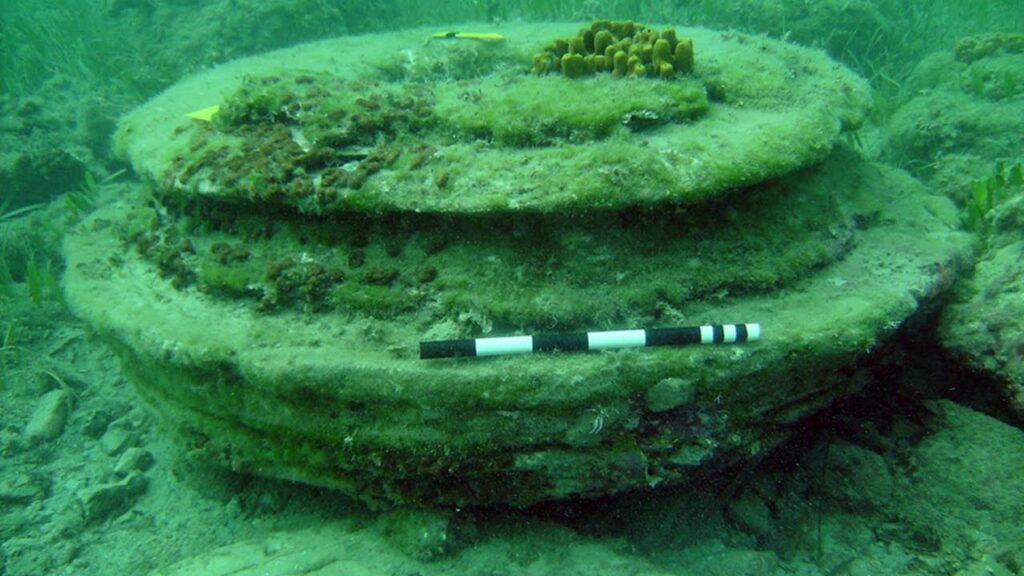
As it glided through the crushing darkness, the submersible’s advanced sonar systems began to detect something remarkable.Geometric patterns emerged from the murky shadows, hinting at structures that defied conventional understanding. The team’s excitement mounted as intricate formations came into view – angular silhouettes that seemed almost too perfect to be natural.
The underwater topography revealed a complex network of what appeared to be deliberately arranged stone-like formations. Precise alignments and symmetrical designs suggested something beyond random geological formations. Each passing moment brought more questions than answers, with the researchers documenting every detail of the unexpected discovery.
Cutting-edge imaging equipment captured intricate details of the submerged structures. Laser-mapping technologies created three-dimensional representations that would later perplex marine geologists and archaeological experts. The submersible inched forward,its powerful lights illuminating sections of an underwater landscape that seemed to hold centuries of untold secrets.
Suddenly, dialog became sporadic. Radio signals grew weak, and the vessel’s tracking systems began to falter. The research team watched in growing tension as the submersible’s position became increasingly uncertain. What had started as a routine scientific expedition was transforming into something far more mysterious.
The last transmitted data showed a series of anomalous readings – electromagnetic fluctuations that defied standard scientific explanation. Temperature variations, unexpected depth changes, and brief moments of signal interference painted a picture of something truly extraordinary occurring beneath the Antarctic ice.Hours passed. Search and rescue teams were deployed, scanning the vast oceanic wilderness. But the submersible had vanished without a trace, leaving behind only fragmented data and a handful of extraordinary images that would spark decades of speculation and research.
Scientific journals would later debate the importance of the discovered structures. Some researchers proposed advanced geological formations, while others hinted at more provocative explanations. The Antarctic waters had claimed another mystery, keeping their secrets hidden beneath layers of ice and darkness.
The disappearance became a footnote in maritime research – a tantalizing enigma that would continue to challenge scientific understanding and fuel the imagination of researchers and explorers for years to come.