
In the vast, dark expanse of cosmic mystery, where starlight whispers ancient secrets and gravity bends reality like a cosmic origami, something is stirring. Scientists, those intrepid explorers of the unknown, are peering into the depths of existence and finding patterns that defy conventional understanding. The universe, it truly seems, is not content to play by the rules we thought we knew. Strange anomalies are emerging, like cryptic messages from a reality beyond our comprehension, challenging everything we believed about space, time, and the basic nature of existence. This is not science fiction; this is the cutting edge of scientific inquiry, where the boundary between the known and the inexplicable blurs into a tantalizing landscape of potential revelation. In the vast expanse of cosmic mysteries, researchers are uncovering phenomena that challenge everything we thought we knew about reality. Recent observations suggest the universe might be far stranger than our current scientific models can explain.
Cutting-edge telescopes and advanced detection systems have captured anomalies that defy conventional understanding. Quantum physicists and cosmologists are increasingly perplexed by unexpected gravitational fluctuations and radiation patterns that emerge from deep space regions previously considered mundane.
Theoretical frameworks are being systematically dismantled as new data contradicts long-established scientific paradigms. Dark matter and dark energy – already enigmatic concepts – now appear even more complex and unpredictable. The fundamental fabric of spacetime seems to possess properties that push the boundaries of human comprehension.
Astronomical measurements reveal subtle distortions in cosmic background radiation that cannot be easily rationalized through existing mathematical models. These minute variations hint at potential interactions occurring beyond our current perceptual and technological limits.
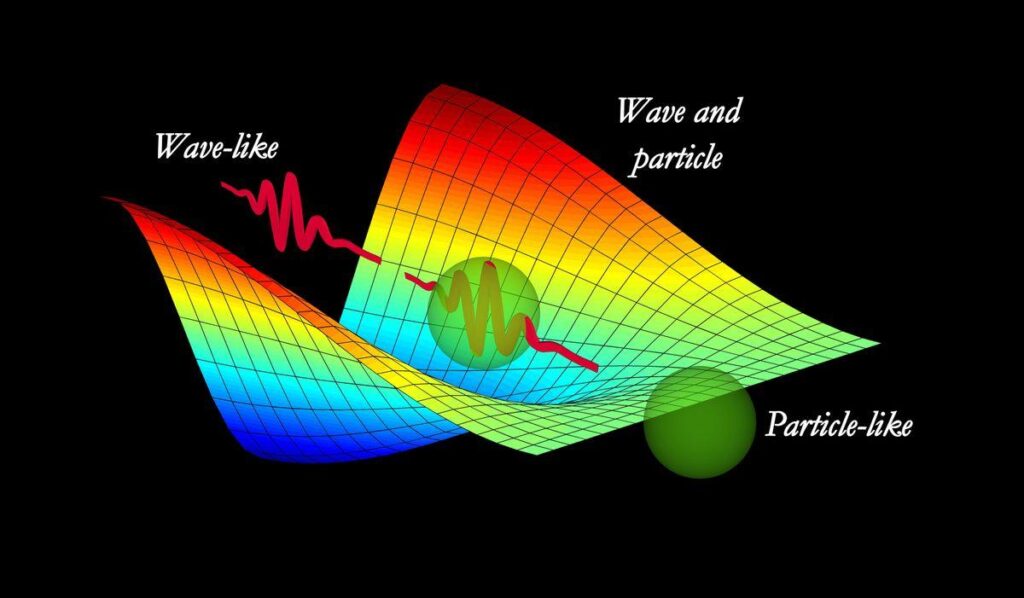
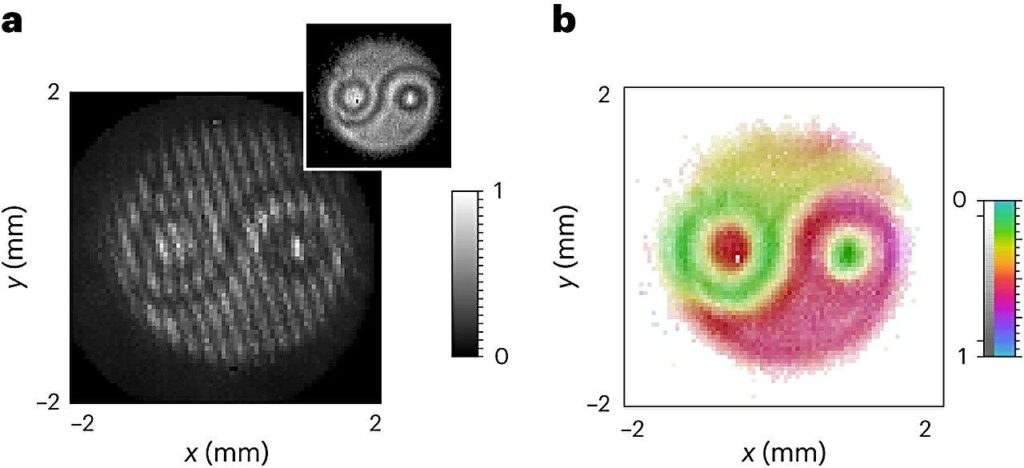
Quantum entanglement experiments continue to produce results that suggest facts might travel faster than light, challenging Einstein’s cornerstone theories. Particles demonstrate behavior that seems to transcend traditional understanding of causality and spatial relationships.
Cutting-edge research indicates potential multidimensional interactions that could fundamentally reshape our understanding of physical reality. Theoretical physicists propose increasingly radical explanations for observed cosmic irregularities, suggesting the universe might operate through mechanisms we’ve yet to fully comprehend.
Some researchers speculate about potential “glitches” in universal mechanics – momentary disruptions that challenge linear scientific interpretation. These theoretical inconsistencies could represent profound insights into the underlying structure of reality itself.
Interdisciplinary teams are collaborating across multiple scientific domains to develop more comprehensive frameworks that might explain these extraordinary observations. Advanced computational models and complex simulation technologies are being deployed to unravel these cosmic mysteries.
The implications of these discoveries extend far beyond academic curiosity. They challenge fundamental philosophical and scientific assumptions about existence, consciousness, and our place within the cosmic landscape.
As technology advances and observational capabilities improve, scientists remain committed to unraveling these perplexing phenomena. Each breakthrough brings us closer to understanding the intricate, sometimes bewildering nature of our universe – a realm that continues to surprise and humble even the most brilliant minds of our generation.
The journey of revelation remains ongoing, with each revelation promising to redefine our understanding of reality’s most fundamental principles.